
LOVE: GOD & OTHERS
1 John 4:7 Dear friends, let us love one another, for love comes from God. Everyone who loves has been born of God and knows God. 8 Whoever does not love does not know God, because God is love. 9 This is how God showed his love among us: He sent his one and only Son into the world that we might live through him. 10 This is love: not that we loved God, but that he loved us and sent his Son as an atoning sacrifice for our sins. 11 Dear friends, since God so loved us, we also ought to love one another. 12 No one has ever seen God; but if we love one another, God lives in us and his love is made complete in us.
13 This is how we know that we live in him and he in us: He has given us of his Spirit. 14 And we have seen and testify that the Father has sent his Son to be the Savior of the world. 15 If anyone acknowledges that Jesus is the Son of God, God lives in them and they in God. 16 And so we know and rely on the love God has for us.
God is love. Whoever lives in love lives in God, and God in them. 17 This is how love is made complete among us so that we will have confidence on the day of judgment: In this world we are like Jesus. 18 There is no fear in love. But perfect love drives out fear, because fear has to do with punishment. The one who fears is not made perfect in love.
19 We love because he first loved us. 20 Whoever claims to love God yet hates a brother or sister is a liar. For whoever does not love their brother and sister, whom they have seen, cannot love God, whom they have not seen. 21 And he has given us this command: Anyone who loves God must also love their brother and sister.
Preached at 6pm at First Evangelical Presbyterian Church of Battle Creek, MI in the Lakeview Senior Assisted Living Center – Sunday, May 24, 2026
1 John 4:7-21
SUMMARY:
A. God is love.
B. If we do not love or if we hate others, we do not have the love of God.
C. God showed His love by sending the Son to be the Savior of the world & through the death of Jesus for our sins
D. We receive this Love by acknowledging that Jesus is indeed the risen Son of God.
E. Perfect love drives out fear and removes dread of punishment.
F. We prove that we have received this love by loving one another.
APPLICATION:
1. Receive the love of God in Christ.
2. Love one another in view of God’s love for you.
3. Pray for people in the world who do not yet know God’s love to receive this love.
“THE FINAL FRONTIER: A CRY TO THE GLOBAL CHURCH”
By Reuben Kachala
O Church of Christ, you shining bride,
Clothed in light, once crucified.
Redeemed by blood, called to proclaim—
*Have you forgotten your Husband’s name?*
For He, the Lamb with nail-pierced hands,
Declared His worth in every land.
He made a vow, a promise bold:
*“All nations shall My glory hold.”*
From Abraham’s seed, the Word took flight,
To bless all peoples with saving light.
Through Moses, David, prophet’s pen,
*He spoke His heart: “All tribes, all men.”*
Yet today He waits… waits still,
For hearts to burn, for hands to will.
His great ambition unfulfilled—
*The task remains, the world stands still.*
O Church, hear now the voice of flame—
A summons not to play, but claim.
The Great Commission still undone,
*The Harvest waits beneath the sun.*
Six billion souls have heard His Name,
And lifted high the Savior’s fame.
But two billion more still walk in night,
*Untouched by Gospel, lost from sight.*
They live in lands where none have gone,
Where Jesus’ name is yet unknown.
No church to call, no praise to sing,
*No cross, no Christ, no risen King.*
Frontier People Groups—obscure,
Yet two billion lost, of this be sure.
Five thousand peoples, waiting still,
*For just one soul to do His will.*
O Church, what have we done with grace?
Have we kept it locked in just one place?
While 1% go to those unreached,
*The rest stay home where pulpits preach.*
We staff our teams with media pros,
We plant our churches row by row.
We fund our bands, our concerts grand,
*But neglect the unreached in distant land.*
We disciple those already found,
Yet leave the lost in foreign ground.
We’ve built our empires, carved our pews—
*But left the unreached with no Good News.*
What is this Great Imbalance now?
*The time to shift, to act, is now.*
Malawi’s cry, Brazil’s alarm,
From China’s house to Kenya’s farm.
From India’s call to Europe’s shore,
*“Let us send! Let us give more!”*
The Spirit shouts through Paul again:
“Make it your aim to go to them!”
To places where His name’s unknown,
*To build where none have built a stone.*
Oh William Carey, Ralph Winter too—
They saw this task and rallied through.
Shall we just read their tales in books,
*While turning from the unreached’s looks?*
Rise now, O global Church, arise!
Shake off your sleep, open your eyes!
God is moving, the time is near—
*The final tribes must also hear.*
He’s calling not just preachers bold,
But senders, givers, warriors old.
He wants the mobilizer’s cry,
*The intercessor’s daily sigh.*
He wants the technician’s hand,
The advocate to take a stand.
He’s calling trainers, shepherds, teams—
*To live and die for Frontier dreams.*
The FPGs are waiting long—
No church, no witness, no salvation song.
No Gospel seed, no Jesus told,
*No fellowship to break the hold.*
Yet half the missionaries we send,
Go where the Gospel does not need friends.
The rest go feed where sheep already graze—
*But none go into that darker maze.*
Why, Church? Why this tragic split?
Did Christ not call us out of it?
Did He not say: “All peoples reached”—
*Not just our comfort zones and streets?*
The hour is late, the King soon comes—
The trumpet waits, the angel drums.
But will the cry of FPGs
*Be silenced still by our strategies?*
Will He return with tears instead,
Because His bride refused what He said?
Because we prayed and played and taught,
*But never reached the lands He sought?*
O Church, repent. Return. Reclaim.
Renew your call. Rekindle flame.
The task remains. The map still burns.
*The King still waits. The Spirit yearns.*
*So GO, or SEND, or WEEP, or PRAY—*
But do not sleep another day.
This cry from Heaven shakes the land:
*“I have other sheep—extend your hand!”*
From Pakistan to Bengal’s streets,
Where Urdu, Hindi, Bengali meet—
To Pashtuns, Shaikhs, and Rajput clans,
*To Persians, Turks, and tribal lands.*
God waits for songs He hasn’t heard,
For tongues that never praised His Word.
Will you help fulfill His greatest joy—
*Or will His glory we destroy?*
Now Church—choose. Obey or stray.
The call is loud. The cost is grave.
The frontier waits. The King commands.
*Will you respond with pierced hands?*
Final Wishes
When will the day end of sorrow and regrets?
All the if only’s, what if’s, and not yet’s …
All the misunderstandings, that unspoken word …
All the flaws and failures, and debts we incurred.
We wonder with whom, when and how we will die;
Thoughts of that day lead us to mourn and to cry.
While yearning for hope and avoiding the pain
In the midst of the loss, what did we gain?
A chance to be loved and to love in return;
The lessons of grace and forgiveness we learned;
The wise courage to try and strength to endure;
A confident trust and new hope that is sure.
We look for answers of truth, but inwardly sigh:
What happened? To whom? Lord, Why? Why? Why?”
Our loved one was marked with dreams and wishing
But now we are left and the person is missing.
We had all those things we wanted to say,
Yet for now we must wait, we gather, we pray.
All the if only’s, what if’s, and not yet’s …
All the misunderstandings, that unspoken word …
All the flaws and failures, and debts we incurred.
We wonder with whom, when and how we will die;
Thoughts of that day lead us to mourn and to cry.
While yearning for hope and avoiding the pain
In the midst of the loss, what did we gain?
A chance to be loved and to love in return;
The lessons of grace and forgiveness we learned;
The wise courage to try and strength to endure;
A confident trust and new hope that is sure.
We look for answers of truth, but inwardly sigh:
What happened? To whom? Lord, Why? Why? Why?”
Our loved one was marked with dreams and wishing
But now we are left and the person is missing.
We had all those things we wanted to say,
Yet for now we must wait, we gather, we pray.
Categories: Uncategorized
Leave a comment
Fear of the LORD, Faith in our Father, & Fuel for a Faithful Life
Some people believe that faith in God is opposed to fear of the Lord or that God only revealed himself as a Father in the New Testament. This short summary shows that the truth affirms more than is popular among people today.
An early reference to the fatherhood of God is found in Deuteronomy 5:8: You should know in your heart that as a man chastens his son, so the Lord your God chastens you. Notice several things:
- This is a truth that should settle deep in our hearts.
- God is our Father, which is the basis for human fathers caring for their children.
- Because God is our Father, He disciplines us with both rewards and the rod.
Often in Jesus’ day, the leaders asked him questions, but there came a point at which he asked them a poignant question: Matthew 22:41-46 While the Pharisees were gathered together, Jesus asked them, saying, “What do you think about the Christ? Whose Son is He?” They said to Him, “The Son of David.” He said to them, “How then does David in the Spirit call Him ‘Lord,’ saying: ‘The Lord said to my Lord, “Sit at My right hand, Till I make Your enemies Your footstool” ’? If David then calls Him ‘Lord,’ how is He his Son?” And no one was able to answer Him a word, nor from that day on did anyone dare question Him anymore.
Every Jew believed that the Messiah had to be the Son of David and thus a son of Judah and of Abraham, Isaac, and Israel. But Jesus traced his lineage back further and got to the root identity of the Messiah: The Son of God, and thus the Lord of David. Though you and I may be children of God by faith, we do not possess the divine right to be called children of God, for we have all sinned and we die.
Jesus had quoted the first verse from Psalm 110:1-4 A Psalm of David. The Lord said to my Lord, “Sit at My right hand, Till I make Your enemies Your footstool.” The Lord shall send the rod of Your strength out of Zion. Rule in the midst of Your enemies! Your people shall be volunteers In the day of Your power; In the beauties of holiness, from the womb of the morning, You have the dew of Your youth. The Lord has sworn And will not relent, “You are a priest forever According to the order of Melchizedek.”
This was regarded as a messianic Psalm in Jesus’ day: The Messiah was Lord, ruled among his enemies, and led a voluntary association, not necessarily a merely ethnic or national army. Indeed, he was the Priest-King, par excellence, Like Melchizedek. This should energize us to volunteer in some way. This should energize us to live well.
David had received a promise in 2 Samuel 7:12-16 that spoke of his Heir, a Son of David that would be the Son of God. “When your days are fulfilled and you rest with your fathers, I will set up your seed after you, who will come from your body, and I will establish his kingdom. He shall build a house for My name, and I will establish the throne of his kingdom forever. I will be his Father, and he shall be My son. If he commits iniquity, I will chasten him with the rod of men and with the blows of the sons of men. But My mercy shall not depart from him, as I took it from Saul, whom I removed from before you. And your house and your kingdom shall be established forever before you. Your throne shall be established forever.” Again, both blessing and blows are promised to the son of David. He is both the Royal Son of God and the Rejected Suffering Servant.
As we look at the end of the Bible, we see how this all ties together: Revelation 22:12-16 “And behold, I am coming quickly, and My reward is with Me, to give to every one according to his work. I am the Alpha and the Omega, the [f]Beginning and the End, the First and the Last.” Blessed are those who [g]do His commandments, that they may have the right to the tree of life, and may enter through the gates into the city. But outside are dogs and sorcerers and sexually immoral and murderers and idolaters, and whoever loves and practices a lie. “I, Jesus, have sent My angel to testify to you these things in the churches. I am the Root and the Offspring of David, the Bright and Morning Star.”
Jesus is both the source and the son of David. He shines both brightly and early. Jesus sets the standard of perfection. You cannot love the Savior and love sin at the same time. Yes, we all sin in many ways, but Jesus helps us hate the sin and seek His salvation day after day. Our Father will reward those who seek the Lord while he may be found. If you look the Lord Jesus, you will find favor with the Father in Heaven.
Gardening and Your Health
Edited from version shared for WC-CMH Health & Wellness Team – June 2024
George Washington Carver, founder of the Tuskegee Institute, believed that everyone should garden to cultivate virtues and learn the lessons of growing things.
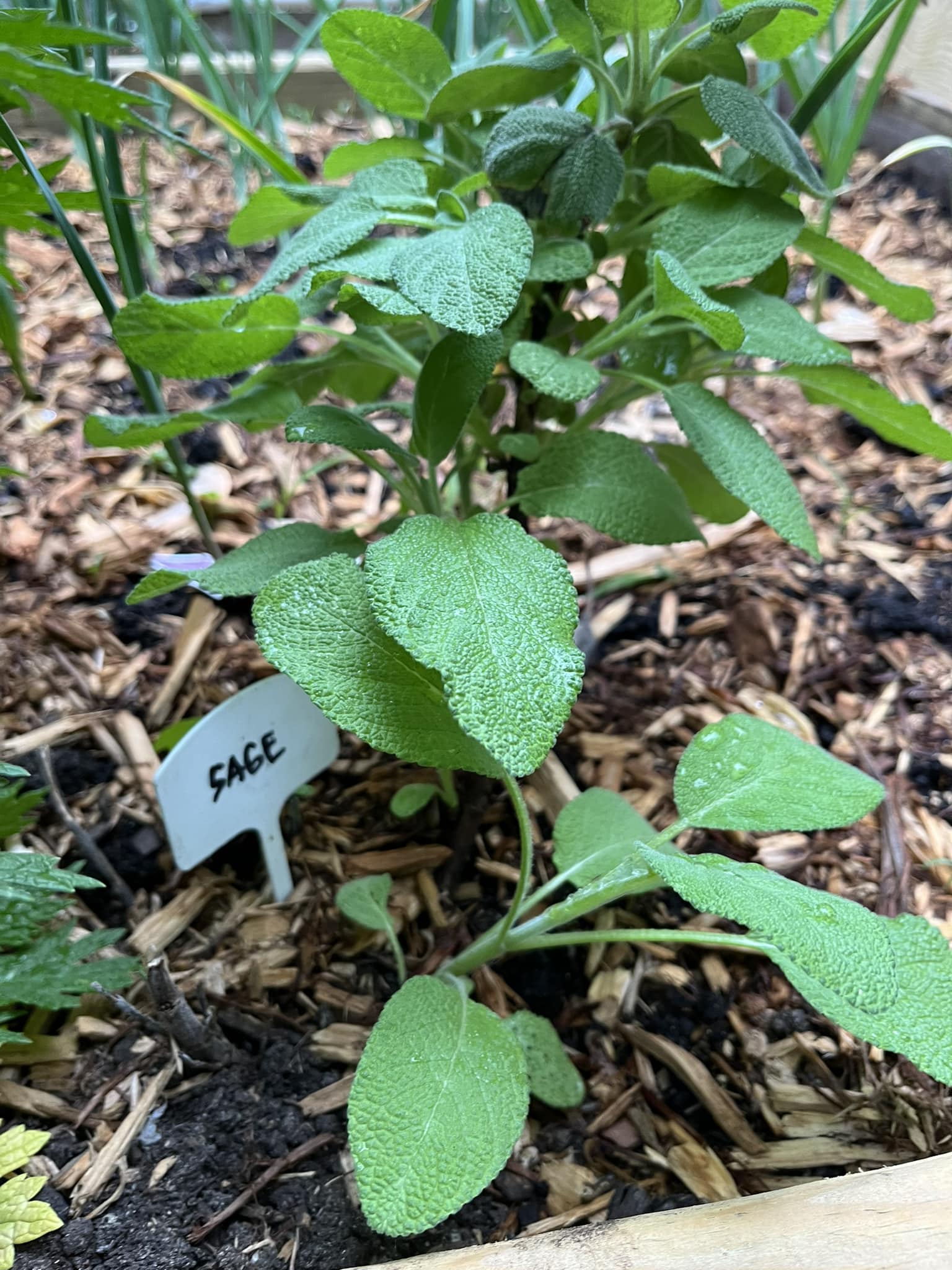
Gardens have long been a refuge for the soul and body. The joy of planting a garden, even in pots on the porch is an act of hope for the future: believing that a harvest will come.
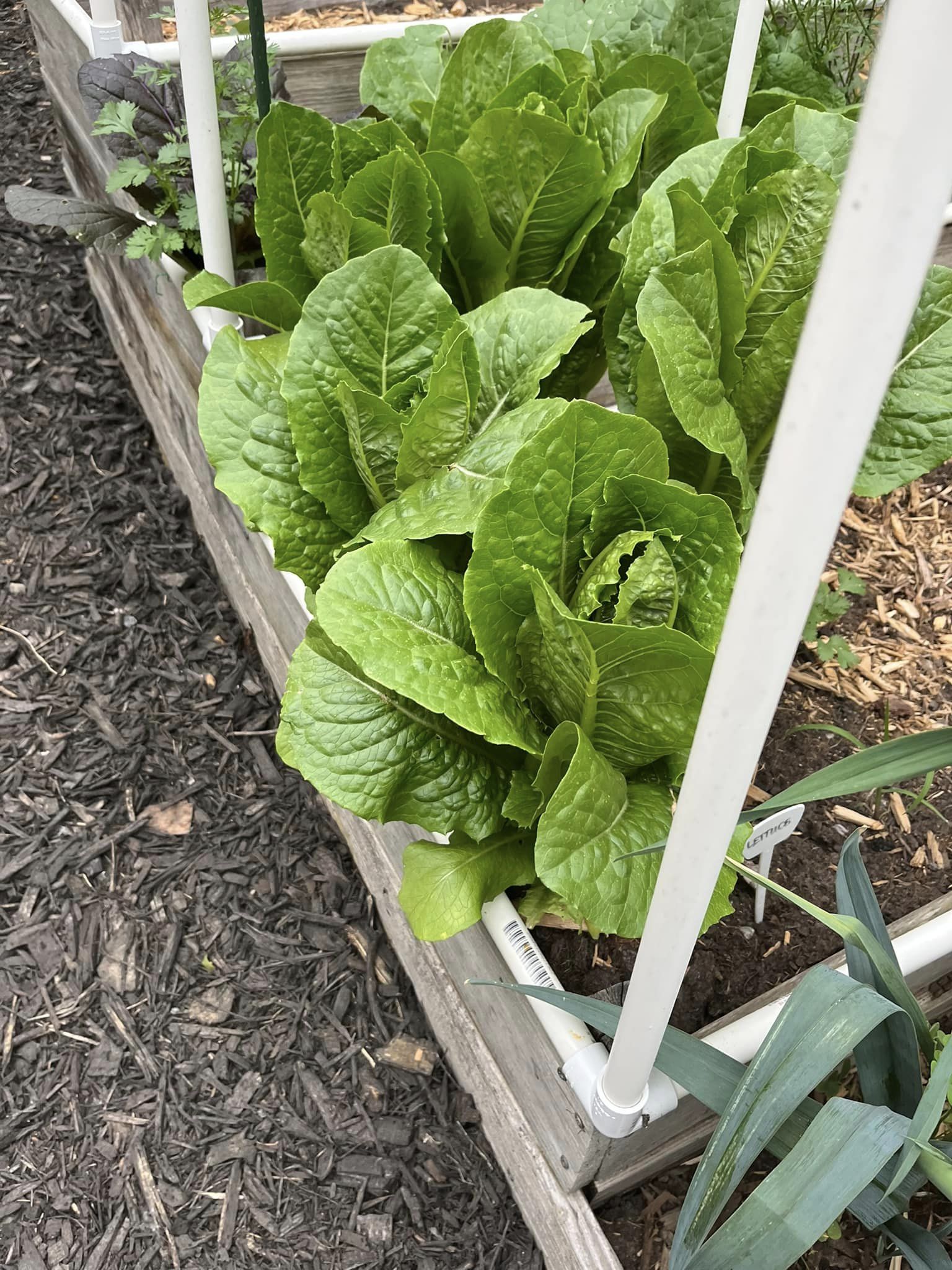
As gardeners watch their cultivated plants grow, bloom and fruit can reduce stress and add a little excitement into the day. The exercise involved in cultivating the soil, planting, weeding, watering, and harvesting builds endurance. The bigger the garden you manage, the more exercise you will have.
Watching pollinators like butterflies and bees can add a bit of excitement to the small piece of land that you manage. Taking photos of the garden can remind you of the fun and warmth of summer during the cold nights of winter.
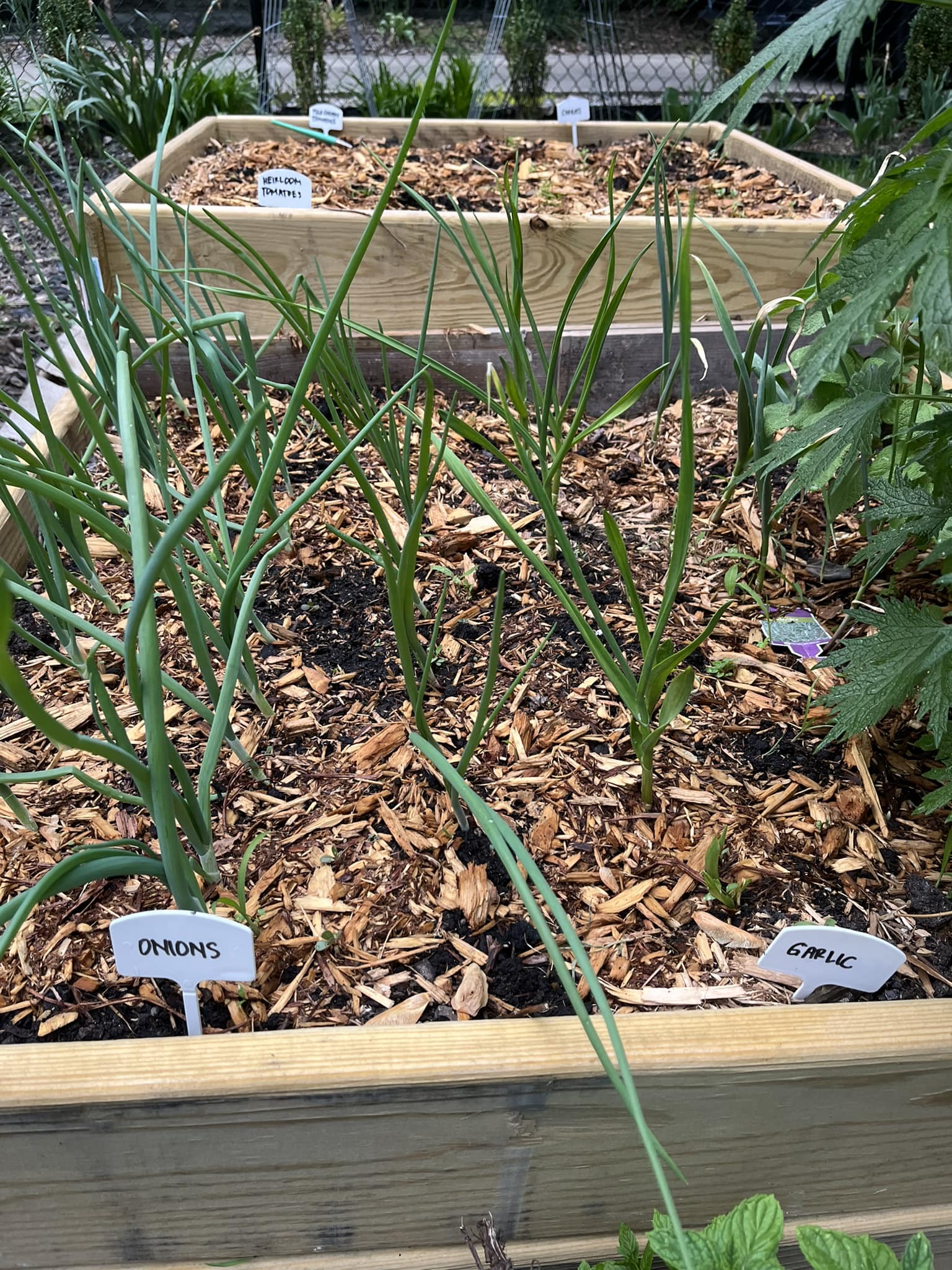
A good strategy for getting a balance of nutrients from your garden is by planting produce with a variety of colors and kinds. Different shades in the edible portions of plants are often associated with different nutrients. Legumes, leafy greens, squash, tomatoes, potatoes, corn, all have a different set of nutrients.
Planting a few herbs in pots that you can bring inside during the winter can ensure that you get very nutritious bursts that are especially good for gut health, and you will also have flavors year-round. Having some indoor plants to cultivate during the winter can also help fight off the winter blues.
Another benefit of growing your own strawberries or peppers is that you will get to pick the fruit at the peak of ripeness and eat them soon afterwards, ensuring you get the maximum number of nutrients. Produce in the store often comes from miles away and requires many gallons of petrochemicals to get to the store, and the quality and quantity of nutrients in the store-bought foods diminishes daily after picking during this transit.
If you haven’t already, now is the time to gather a few plants to grow at your home so you too can enjoy the fruit of your labors.
Categories: Uncategorized
Tags: garden, gardening, indoor-gardening, sustainable-living
Leave a comment
The Lamb & the Tree
While Israel waited in the land of Ham
Our God prepared to send them out and free
Them through the sacrifice of year-old lambs
Which shed their blood to cover doors. “Believe
The coming sacrifice,” God spoke through lambs.
By looking to the Lord who came, we see
Messiah was a babe and great “I AM,”
The promise found in tree-curse prophecy,
An answer to the high priests’ offering scam.
In One bold Man, both Jews and Gentiles freed
From ancient rites with bethlehemic lambs
To live our lives now Son-set-free indeed!
Because of Him, at holidays some eat ham
Or turkeys—trimming, too, their festal trees.
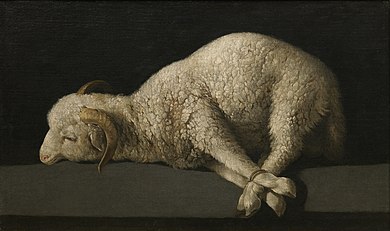
Agnus Dei (Latin for Lamb of God) is an oil painting completed between 1635 and 1640 by the Spanish Baroque artist Francisco de Zurbarán. It is housed in the Prado Museum in Madrid, Spain.
Categories: Uncategorized
Leave a comment
Broken Branches
“Broken Branches”
The storms of winter descended upon the city.
Many rendered powerless.
Darkness descended on the land.
Yet in the morning, a sparkly, bright, and dangerous wonderland.
As many as could, huddled inside to stay warm and comforted.
Food that would have been wasted was eaten.
And all around lay fallen, broken branches.
Men gathered limbs, cleared roads, restored lines of communication.
Power was returned to the people.
And then another wave of weighty storms descended.
“When will winter end?”
“When will I have power?”
And there in the carnage lay Mr Squirrel, fallen from the heights.
Yet still along the streets lay rows of broken branches.
Warmth and cold ebbed and flowed,
Walks were shoveled and hovels released residents.
The winds changed.
Rumors of other storms and floods and deaths rolled through.
Power was mostly restored,
though some still were disconnected.
But the memory of winter would not quit till spring
For all over town, hanging all around, lay broken branches.
With time, trees are trimmed, twigs picked up, limbs pruned.
Broken branches were sawn in pieces.
Peace was slowly restored.
After Pi Day and Patrick’s Day, and Impossible Shepherd’s Pie:
Joy erupted, sun shines later, heralding Spring:
Clean Streets! Clean homes and hearths and hearts!
Soon enough life will emerge in baby squirrels and budding branches.
So we shall march onward,
until the Common Life we had forgotten,
is remembered as risen in fresh power.
(C) Merton J. Hershberger St. Patrick’s Day 2023
First Shared with my Sherman Street Neighbors.
Categories: Uncategorized
Leave a comment
Salt: Measured Judgment Designed to Activate Our Faith
Salt as a Sign of Judgment:
Deuteronomy 29:23 The whole land will be a burning waste of salt and sulfur—nothing planted, nothing sprouting, no vegetation growing on it. It will be like the destruction of Sodom and Gomorrah, Admah and Zeboyim, which the Lord overthrew in fierce anger.
Joshua 9:45 All that day Abimelek pressed his attack against the city until he had captured it and killed its people. Then he destroyed the city and scattered salt over it.
Psalm 107:33-34 He turned rivers into a desert, / flowing springs into thirsty ground,
and fruitful land into a salt waste, / because of the wickedness of those who lived there.
Jeremiah 17:6 That person will be like a bush in the wastelands; they will not see prosperity when it comes. They will dwell in the parched places of the desert, in a salt land where no one lives.
Jeremiah 48:9 Put salt on Moab, for she will be laid waste; her towns will become desolate, with no one to live in them.
Salty Lands as a Place of Desert and Abandon:
See many of the above and many in addition … sort of the aftermath of judgment. To many to list all.
Salt as a Part of Worship, Essential to the Covenant with God
Exodus 30:34-36 34 Then the Lord said to Moses, “Take fragrant spices—gum resin, onycha and galbanum—and pure frankincense, all in equal amounts, 35 and make a fragrant blend of incense, the work of a perfumer. It is to be salted and pure and sacred. 36 Grind some of it to powder and place it in front of the ark of the covenant law in the tent of meeting, where I will meet with you. It shall be most holy to you.
Leviticus 2:13 Season all your grain offerings with salt. Do not leave the salt of the covenant of your God out of your grain offerings; add salt to all your offerings.
Ezra 6:9 Whatever is needed—young bulls, rams, male lambs for burnt offerings to the God of heaven, and wheat, salt, wine and olive oil, as requested by the priests in Jerusalem—must be given them daily without fail …
Ezra 7:21-23 21 Now I, King Artaxerxes, decree that all the treasurers of Trans-Euphrates are to provide with diligence whatever Ezra the priest, the teacher of the Law of the God of heaven, may ask of you— 22 up to a hundred talents of silver, a hundred cors of wheat, a hundred baths of wine, a hundred baths of olive oil, and salt without limit. 23 Whatever the God of heaven has prescribed, let it be done with diligence for the temple of the God of heaven. Why should his wrath fall on the realm of the king and of his sons?
Ezekiel 43:23-24 23 When you have finished purifying it, you are to offer a young bull and a ram from the flock, both without defect. 24 You are to offer them before the Lord, and the priests are to sprinkle salt on them and sacrifice them as a burnt offering to the Lord.
Salt as the Seal of a Covenant
Numbers 18:19 Whatever is set aside from the holy offerings the Israelites present to the Lord I give to you and your sons and daughters as your perpetual share. It is an everlasting covenant of salt before the Lord for both you and your offspring.
2 Chronicles 13:5 Don’t you know that the Lord, the God of Israel, has given the kingship of Israel to David and his descendants forever by a covenant of salt?
The Healing Virtue of Salt
2 Kings 2:19-21 19 The people of the city said to Elisha, “Look, our lord, this town is well situated, as you can see, but the water is bad and the land is unproductive.”
20 “Bring me a new bowl,” he said, “and put salt in it.” So they brought it to him.
21 Then he went out to the spring and threw the salt into it, saying, “This is what the Lord says: ‘I have healed this water. Never again will it cause death or make the land unproductive.’”
Ezekiel 16:4 On the day you were born your cord was not cut, nor were you washed with water to make you clean, nor were you rubbed with salt or wrapped in cloths.
Salt as Seasoning:
Job 6:6 Is an egg eaten without salt, or is there flavor in the sap of the mallow?
Salt in the New Covenant
Matthew 5:13 “You are the salt of the earth@@. But if the salt loses its saltiness, how can it be made salty again? It is no longer good for anything, except to be thrown out and trampled underfoot.
Mark 9:49-50 After speaking of hell, Jesus said, 49“Everyone will be salted with fire.** 50 Salt is good, but if it loses its saltiness, how can you make it salty again? Have salt among yourselves, and be at peace with each other.”
Luke 14:33-35 33 “In the same way, those of you who do not give up everything you have cannot be my disciples.++ 34Salt is good, but if it loses its saltiness, how can it be made salty again? 35 It is fit neither for the soil nor for the manure pile; it is thrown out. Whoever has ears to hear, let them hear.”
Salt in Speech: Good when used sparingly, not good in abundance.
Colossians 4:6 Let your conversation be always full of grace, seasoned with salt%%, so that you may know how to answer everyone.
James 3:10-12 10 Out of the same mouth come praise and cursing. My brothers and sisters, this should not be. 11 Can both fresh water and salt water flow from the same spring? %% 12 My brothers and sisters, can a fig tree bear olives, or a grapevine bear figs? Neither can a salt spring produce fresh water.
FOOTNOTES
@@ Historical note on salt and earth: salt was both healing and judging, the seal of a covenant between God and man. Those who receive the words of Jesus are the seal of the covenant between God and man in the land. If we are faithful, we bring miraculous healing to the earth from God. If we are not faithful to our purpose, we bring judgment to the land from God.
** Historical note on how salt was harvested: salty soil was boiled down and salt extracted by marching armies so the army took the crust of salt from the boiling pot and nourished the sweaty army. ++ Historical note on salt and worship: salt was used to spice up the worship. It was used to emphasize the covenantal nature of worship towards the Creator. Sacrifice and giving things up was to be joined to salt for it to be worthy worship. We like a little salt, so does God. He desires to only judge a little bit.
%% Contextual note on Salt and Speech: salty speech (referring to judgment) is essential for communicating truth and bringing grace. If we never refer to hell, heaven will not be so sweet. If we speak of hell too often and too loosely, it loses significance. We lose our freshness.
The Parable of Salt in Sausage: The difference between a sausage patty and a hamburger is that salt is mixed in well with the sausage. The salt in ground meat serves the same function as sulfur (another chemical associated with judgment biblically) in rubber compounds. Sulfur and salt in these instances are activators. They activate the forming of chemical bonds or links within the compound so that the mixture doesn’t just fall apart after fire/heat is applied. A little touch of judgment reminds us to activate our faith and not to hold our faith passively. This ability of sausage to bounce back is equivalent to our resilience in life. When we realize that God judges our works, we are more likely to actively express our faith in works of service and witness
© Italics written and verses organized by Mert Hershberger, 2023, Ypsilanti MI.
Verses from New International Version (NIV) Holy Bible, New International Version®, NIV® Copyright ©1973, 1978, 1984, 2011 by Biblica, Inc.® Used by permission. All rights reserved worldwide.
Am I kosher in Christ?
Is it okay for a person who believes in and seeks to obey the Jewish Messiah Jesus to eat pork and shrimp?
Yes. The short answer is that the church has believed it is okay with Jesus no matter what we types of created food we eat. Here was the conclusion of the first church council in their letter to believers among the gentiles:
“We have heard that some went out from us without our authorization and disturbed you, troubling your minds by what they said. It seemed good to the Holy Spirit and to us not to burden you with anything beyond the following requirements: You are to abstain from food sacrificed to idols, from blood, from the meat of strangled animals and from sexual immorality. You will do well to avoid these things. Farewell.” – Acts 15:24, 28-29 NIV
Going back to the beginning of humanity, originally, people ate a plant based diet only:
“So God created mankind in his own image, in the image of God he created them; male and female he created them. God blessed them and said to them, “Be fruitful and increase in number; fill the earth and subdue it. Rule over the fish in the sea and the birds in the sky and over every living creature that moves on the ground.” Then God said, “I give you every seed-bearing plant on the face of the whole earth and every tree that has fruit with seed in it. They will be yours for food.” – Genesis 1:27-29 NIV
However, even then, one certain bit of stubborn vegetation was forbidden:
“The Lord God made all kinds of trees grow out of the ground—trees that were pleasing to the eye and good for food. In the middle of the garden were the tree of life and the tree of the knowledge of good and evil. And the Lord God commanded the man, “You are free to eat from any tree in the garden; but you must not eat from the tree of the knowledge of good and evil, for when you eat from it you will certainly die.”” Genesis 2:9, 16-17 NIV
However, people ate from the wrong tree and so life got out of control, even deadly:
“And [the Lord] said, “Who told you that you were naked? Have you eaten from the tree that I commanded you not to eat from?” The man said, “The woman you put here with me—she gave me some fruit from the tree, and I ate it.” … [The Lord said to Adam], “Because you listened to your wife and ate fruit from the tree about which I commanded you, ‘You must not eat from it,’ “Cursed is the ground because of you; through painful toil you will eat food from it all the days of your life. It will produce thorns and thistles for you, and you will eat the plants of the field. By the sweat of your brow you will eat your food until you return to the ground, since from it you were taken; for dust you are and to dust you will return.”” – Genesis 3:11-12, 17-19 NIV
Ten generations later, a global flood wiped out the earth’s creatures. As the Lord was renewing the earth, He allowed people to eat meat … again, with certain restrictions:
“Then God blessed Noah and his sons, saying to them, “Be fruitful and increase in number and fill the earth. The fear and dread of you will fall on all the beasts of the earth, and on all the birds in the sky, on every creature that moves along the ground, and on all the fish in the sea; they are given into your hands. Everything that lives and moves about will be food for you. Just as I gave you the green plants, I now give you everything. “But you must not eat meat that has its lifeblood still in it. And for your lifeblood I will surely demand an accounting. I will demand an accounting from every animal. And from each human being, too, I will demand an accounting for the life of another human being.” – Genesis 9:1-5 NIV
Later, the Lord reinforced and clarified the reason for the restriction against consumption of blood: life is in the blood and sin would be atoned for and forgiven through the offering of blood:
“For the life of a creature is in the blood, and I have given it to you to make atonement for yourselves on the altar; it is the blood that makes atonement for one’s life. Therefore I say to the Israelites, “None of you may eat blood, nor may any foreigner residing among you eat blood.” Any Israelite or any foreigner residing among you who hunts any animal or bird that may be eaten must drain out the blood and cover it with earth, because the life of every creature is its blood. That is why I have said to the Israelites, “You must not eat the blood of any creature, because the life of every creature is its blood; anyone who eats it must be cut off.” … Anyone, whether native-born or foreigner, who eats anything found dead or torn by wild animals must wash their clothes and bathe with water, and they will be ceremonially unclean till evening; then they will be clean.” – Leviticus 17:11-15 NIV
After this, the Lord clarified for Israel what foods were acceptable and which ones weren’t. These rules became the basis for Kosher laws:
“You may eat any animal that has a divided hoof and that chews the cud. Of all the creatures living in the water, you may eat any that has fins and scales. But any winged creature that is clean you may eat. Do not eat anything you find already dead. You may give it to the foreigner residing in any of your towns, and they may eat it, or you may sell it to any other foreigner. But you are a people holy to the Lord your God. Do not cook a young goat in its mother’s milk.” – Deuteronomy 14:6, 9, 20-21 NIV
Some of these rules don’t make sense now, but the likely were intended to keep Israel out of pagan rituals and unhealthy practices. Even today, militaries teach similar principles for survival: for example: don’t eat carnivorous animals or animals found dead.
However, there was a promise that God would provide for the daily needs of those who trusted in the Lord:
“This poor man called, and the Lord heard him; he saved him out of all his troubles. … Taste and see that the Lord is good; blessed is the one who takes refuge in him. … The lions may grow weak and hungry, but those who seek the Lord lack no good thing.” – Psalms 34:6, 8, 10 NIV
Indeed, it seems that the enjoyment of these daily gifts of food were designed by God to lend happiness to our lives, when enjoyed rightly:
“I know that there is nothing better for people than to be happy and to do good while they live. That each of them may eat and drink, and find satisfaction in all their toil—this is the gift of God. … Be warned, my son, of anything in addition to them. Of making many books there is no end, and much study wearies the body. Now all has been heard; here is the conclusion of the matter: Fear God and keep his commandments, for this is the duty of all mankind. For God will bring every deed into judgment, including every hidden thing, whether it is good or evil.” – Ecclesiastes 3:12-13; 12:12-14 NIV
However, by the time of Jesus, man-made rules for food and sharing meals had become complicated and burdensome … so much so that people were neglecting the more important matters of keeping a clean heart and truly holy life:
“The Pharisees and some of the teachers of the law who had come from Jerusalem gathered around Jesus and saw some of his disciples eating food with hands that were defiled, that is, unwashed. (The Pharisees and all the Jews do not eat unless they give their hands a ceremonial washing, holding to the tradition of the elders. When they come from the marketplace they do not eat unless they wash. And they observe many other traditions, such as the washing of cups, pitchers and kettles.) So the Pharisees and teachers of the law asked Jesus, “Why don’t your disciples live according to the tradition of the elders instead of eating their food with defiled hands?” He replied, “Isaiah was right when he prophesied about you hypocrites; as it is written: “ ‘These people honor me with their lips, but their hearts are far from me. They worship me in vain; their teachings are merely human rules.’ Again Jesus called the crowd to him and said, “Listen to me, everyone, and understand this. Nothing outside a person can defile them by going into them. Rather, it is what comes out of a person that defiles them.” After he had left the crowd and entered the house, his disciples asked him about this parable. “Are you so dull?” he asked. “Don’t you see that nothing that enters a person from the outside can defile them? For it doesn’t go into their heart but into their stomach, and then out of the body.” (In saying this, Jesus declared all foods clean.) He went on: “What comes out of a person is what defiles them. For it is from within, out of a person’s heart, that evil thoughts come—sexual immorality, theft, murder, adultery, greed, malice, deceit, lewdness, envy, slander, arrogance and folly. All these evils come from inside and defile a person.” – Mark 7:1-7, 14-15, 17-23 NIV
Apparently, it took a while for Peter and the other missionaries to grasp the implications of this, but the Lord did get the message through in a dramatic way:
“About noon the following day as they were on their journey and approaching the city, Peter went up on the roof to pray. He became hungry and wanted something to eat, and while the meal was being prepared, he fell into a trance. He saw heaven opened and something like a large sheet being let down to earth by its four corners. It contained all kinds of four-footed animals, as well as reptiles and birds. Then a voice told him, “Get up, Peter. Kill and eat.” “Surely not, Lord!” Peter replied. “I have never eaten anything impure or unclean.” The voice spoke to him a second time, “Do not call anything impure that God has made clean.” This happened three times, and immediately the sheet was taken back to heaven. While Peter was wondering about the meaning of the vision, the men sent by Cornelius found out where Simon’s house was and stopped at the gate. They called out, asking if Simon who was known as Peter was staying there. While Peter was still thinking about the vision, the Spirit said to him, “Simon, three men are looking for you. So get up and go downstairs. Do not hesitate to go with them, for I have sent them.” As Peter entered the house, Cornelius met him and fell at his feet in reverence. But Peter made him get up. “Stand up,” he said, “I am only a man myself.” While talking with him, Peter went inside and found a large gathering of people. He said to them: “You are well aware that it is against our law for a Jew to associate with or visit a Gentile. But God has shown me that I should not call anyone impure or unclean.” – Acts 10:9-20, 25-28 NIV
God wanted people from every culture to have access to the forgiveness that is in Christ, and the church realized that extra food laws for the gentile believers, were unnecessary. They returned to the basic guidelines God had given in Noah’s time:
“When they finished, James spoke up. “Brothers,” he said, “listen to me. “It is my judgment, therefore, that we should not make it difficult for the Gentiles who are turning to God.” – Acts 15:13, 19 NIV
Today, people who believe in Jesus as Lord follow a wide variety of dietary patterns, some choices are based on religious principles, some on health or allergy concerns, and sometimes we adapt our diet based on not wanting to offend others:
“Accept the one whose faith is weak, without quarreling over disputable matters. One person’s faith allows them to eat anything, but another, whose faith is weak, eats only vegetables. The one who eats everything must not treat with contempt the one who does not, and the one who does not eat everything must not judge the one who does, for God has accepted them. … Therefore let us stop passing judgment on one another. Instead, make up your mind not to put any stumbling block or obstacle in the way of a brother or sister. I am convinced, being fully persuaded in the Lord Jesus, that nothing is unclean in itself. But if anyone regards something as unclean, then for that person it is unclean. If your brother or sister is distressed because of what you eat, you are no longer acting in love. Do not by your eating destroy someone for whom Christ died. Therefore do not let what you know is good be spoken of as evil. For the kingdom of God is not a matter of eating and drinking, but of righteousness, peace and joy in the Holy Spirit, because anyone who serves Christ in this way is pleasing to God and receives human approval.” – Romans 14:1-3, 13-18 NIV
Since life is about more than food, we should walk in the Holy Spirit and relate to one another in a rightly considerate, peaceful, and joyful way, all for God’s glory:
“The earth is the Lord’s, and everything in it.” So whether you eat or drink or whatever you do, do it all for the glory of God. – 1 Corinthians 10:26, 31 NIV
One day, the Lord will have a feast for all who are trusting Him faithfully and we will be totally and perfectly satisfied in the presence of God forever:
“Then the angel showed me the river of the water of life, as clear as crystal, flowing from the throne of God and of the Lamb down the middle of the great street of the city. On each side of the river stood the tree of life, bearing twelve crops of fruit, yielding its fruit every month. And the leaves of the tree are for the healing of the nations. No longer will there be any curse. … Blessed are those who wash their robes, that they may have the right to the tree of life and may go through the gates into the city. Outside are the dogs, those who practice magic arts, the sexually immoral, the murderers, the idolaters and everyone who loves and practices falsehood. … The Spirit and the bride say, “Come!” And let the one who hears say, “Come!” Let the one who is thirsty come; and let the one who wishes take the free gift of the water of life. … The grace of the Lord Jesus be with God’s people. Amen.”
Revelation 22:1-3a, 14-15, 17, 21 NIV
God’s eternal favor, that’s the bottom line!!
The Coming of The Prophet, Foreshadow & Fulfillment
If you will be home this Christmas, but would like to have an edifying time with your family or whomever you will be with for the day when Christ’s birth is celebrated, check out the following devotional meditation. Consider taking time to reflect on what the Lord has brought and perhaps share what you learn with someone else. Pray in the Spirit and pray with others who are seeking the Lord at this time.
Exodus 1-3
Moses – Son of Levi, Son of Adam, Lawgiver
Birth preceded by a time of oppression of Hebrew people.
Birth marked by signs in the sky, noted by astronomers. (Josephus)
Pharaoh furious at the coming of a deliverer for his slaves.
Pharaoh wanted the midwives to expose the newborn boys.
The midwives refused to betray the boys.
Pharaoh wanted to wipe out a generation of Hebrews.
Moses escaped to the desert.
Moses later returned to the land of his birth when told the vengeful Pharaoh had died.
The Lord appeared to Moses in a bright bush commissioning him for his life purpose though he was just a shepherd.
Moses was promised in Deuteronomy 18:15 that another prophet like him would come from the Hebrew people.
Matthew 2; Luke 2:1-21
Messiah – Son of Judah, Son of God, Savior
Birth preceded by a time of oppression of Jewish nation.
Birth marked by a star in the east, noted by wise Arab magi. (Dec 25, 1BC=Jupiter&Regulus?)
Herod hated the coming of Messiah the deliverer.
Herod wanted the magi to reveal the location of Messiah.
The magi refused to betray the birthplace of Messiah.
Herod wiped out a generation of children in Bethlehem.
Messiah escaped to Egypt.
Jesus later returned to the land of his birth when Joseph was told that Herod had died.
The Lord sent angels to shepherds keeping their flock commissioning them with good news of the Messiah.
Jesus claimed to be the fulfillment of promises and prophesied the coming of the Holy Spirit in John 14:6.
The Gift of Gifts – A Christmas Prayer
O Source of All Good,
What shall I render to You for the gift of gifts: Your own dear Son, begotten, not created, my Redeemer, proxy, surety, substitute, His self-emptying incomprehensible, His infinity of love beyond the heart’s grasp.
Herein is wonder of wonders: He came below to raise me above, was born like me that I might become like Him.
Herein is love when I cannot rise to Him, He draws near on wings of grace to raise me to Himself.
Herein is power: when Deity and humanity were infinitely apart, He united them in indissoluble unity, the Uncreated and the created.
Herein is wisdom: when I was undone, with no will to return to Him, and no intellect to devise recovery, He came, God incarnate, to save me to the uttermost, as a man to die my death, to shed satisfying blood on my behalf, to work out a perfect righteousness for me.
O God, take me in spirit to the watchful shepherds and enlarge my mind. Let me hear good tidings of great joy, and hearing, believe, rejoice, praise, adore, my conscience bathed in an ocean of repose, my eyes uplifted to a reconciled Father; place me with ox, donkey, camel, goat, to look with them upon my Redeemer’s face, and in Him account myself delivered from sin. Let me with Simeon clasp the new-born child to my heart, embrace Him with undying faith, exulting that He is mine and I am His.
In Him, You have given me so much that Heaven can give no more.
Based on a prayer in The Valley of Vision: A Collection of Puritan Prayers and Devotions, ed. Arthur Bennett. Carlisle, PA: Banner of Truth Trust © 1975.
Categories: Bible Study, Prayer
Tags: birth, Christmas, gift, life, Messiah, Moses, Prayer
Leave a comment

